About Adamatics

We built the platform. The work on it is yours

Adamatics began as two consultants building data science platforms for some of Denmark's largest research organisations. We packaged what worked into a product that runs inside your own infrastructure, on code your team keeps.

  • 2018 Founded in Copenhagen
  • 45+ Years of engineering behind it
  • 0 Customer data on our servers

What we learned as consultants became the product

Adamatics did not start with a product idea. It started with a pattern Sune and Steen kept building by hand for other people, inside Denmark's largest research organisations.

Sune Askjær and Steen Manniche had already built data science platforms together, at Teradata's Think Big Analytics and then as independent consultants, before they founded Adamatics in December 2018. The first years were consulting: building data science infrastructure for some of Denmark's largest pharma and biotech research organisations.

The pattern worked, and it kept working. What became obvious was that the organisations who needed it most were the ones who could not build it: companies without ten internal data scientists and a platform team to spare. So we built the product version ourselves, by hand and with ordinary engineering discipline, over years and long before anyone could generate an application from a paragraph of text.

Generative AI then changed who needs it. A domain expert can now produce a working application in an afternoon, and every organisation has to decide what happens to it next. The environment we had built for data science teams turned out to answer a much larger question.

The name says what it is for. ADA, for AI-Driven Analytics. The suffix -matics, from the Greek -matos, "willing to perform". Analytics that does something, for more than the few people who can write the code.

Today the platform runs inside organisations of roughly 200 to 5,000 people whose advantage comes from what their own experts know, and who cannot afford that knowledge to be unowned, unfindable, or wrong.

Three things we decided early and kept

Work should compound, not repeat

An application built from scratch is spent once. Built from a template your organisation defined, on a library of business logic your organisation has already tested, most of it exists before the work starts, and the part that did not can be captured and added. The twentieth costs less than the fifth.

Trust has to be checkable, not assumed

Ask an agent to drop the rows that look wrong and it will do exactly that. The chart still looks right afterwards, and nothing on screen records that a judgement call was ever made. We build so that the logic behind a result is reviewed, tested and reproducible by default, not on request.

Your infrastructure, your control

The Adamatics Platform is installed inside your own cloud or data centre, single-tenant. We ship no model of our own, so your AI policy survives it unchanged, and we hold none of your data. The code your people write is packaged as your library and keeps running with or without us.

Four situations we recognise

Our customers are organisations of roughly 200 to 5,000 people whose advantage comes from what their own experts build. These shapes recur.

  • AI apps, no homeWork the business built with AI, with nowhere to live Applications produced in an afternoon become the new spreadsheets: useful, relied on, and sitting on a laptop. The platform gives them somewhere to be built, deployed, owned and found.
  • IT and business stuckThe board says go, IT carries the accountability Both sides are right. The platform gives IT identity, access control, logging and code it can maintain, and gives the business somewhere to build. The argument stops being about whether the business may build and starts being about what it should build.
  • Built it, maintaining itAn internal platform that consumes the team that built it You take the platform layer from us, and your engineers go back to the integrations and workflows nobody else could build for your business.
  • Knowledge that walks outExpertise living in heads and one-off scripts The platform turns the logic an expert carries into tested, documented code the next person can find and reuse, so what the organisation knows stays with the organisation rather than the individual.

The founders and the team you will work with

Sune and Steen did not come from software sales. They came from pharma research and enterprise data teams, they built the first versions of this themselves, and they stay personally involved in every customer relationship — alongside the engineers and consultants who deliver it.

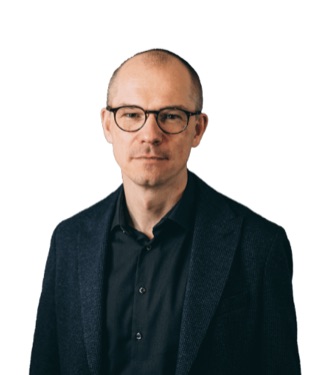
Sune Askjær CEO & Founding Partner
Code is cheap now. Knowing which parts to keep, reuse and trust is the work that is left.

Sune trained as a chemist at the Technical University of Denmark and took a PhD in computer-aided drug design, carried out inside Lundbeck's computational chemistry and research informatics groups. He stayed in pharmaceutical research for twelve years, at Lundbeck and LEO Pharma, building the decision-support and scientific computing systems the scientists actually used, and co-leading a work package in Open PHACTS, the European public-private effort to make pharmacological data findable and reusable across companies. He then led an international data science team across Northern Europe and Russia at Think Big Analytics, a Teradata company, before co-founding Adamatics in 2018. He runs strategy and product direction, and is usually the first person a customer talks to.
  • PhD · Computer-aided drug design
  • 12 years in pharma R&D
  • 20+ years in data & AI
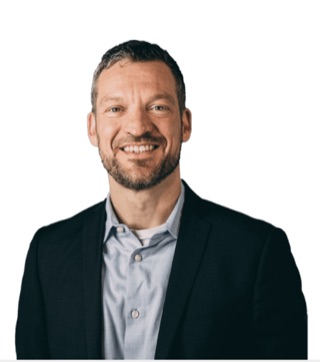
Steen Manniche COO & Founding Partner
If nobody can say who owns something six months after it ships, that's not collaboration, it's exposure.

Steen has been building software since 2001, a decade of it as developer and architect at DBC, then as IT Architect at the National Board of e-Health, where he was Danish technical lead on epSOS, the European cross-border patient data project, and solution architect on the national service platform. Knowing exactly who could access what was never optional there. Pharma came next: research data management at Lundbeck, then a bioinformatics and genomics platform at Novozymes. At Think Big Analytics, a Teradata company, he led the engineering team, built a cloud data science platform, and ran a bioinformatics platform project serving hundreds of scientific users. He co-founded Adamatics with Sune in 2018 and leads operations and platform delivery.

  • 25 years software engineering
  • National e-health architecture
  • Pharma & bioinformatics

The people who show up

Behind Sune and Steen are engineers who build and harden the platform, and consultants who do the installation, the data source integration and the training at the customer's own desk. The second half is not an upsell. A platform like this does not land by being delivered; it lands when someone sits next to the people who have to use it. Most of the team has worked inside the kind of research or engineering organisation Adamatics was built for, which is why they tend to recognise the problem before it is fully described.

Say hello

Talk to the team.

We are based in Copenhagen. Book a call or write to info@adamatics.com.