AI & GenAI
AI Agents for Analysts: How LLMs Are Boosting Productivity
How large language models are changing the day-to-day work of data analysts — and what it means for enterprise analytics teams.

COO & Founding Partner
If nobody can say who owns something six months after it ships, that's not collaboration, it's exposure.Steen on LinkedIn
Biography
Steen has been building software since 2001, a decade of it as developer and architect at DBC, then as IT Architect at the National Board of e-Health, where he was Danish technical lead on epSOS, the European cross-border patient data project, and solution architect on the national service platform. Knowing exactly who could access what was never optional there. Pharma came next: research data management at Lundbeck, then a bioinformatics and genomics platform at Novozymes. At Think Big Analytics, a Teradata company, he led the engineering team, built a cloud data science platform, and ran a bioinformatics platform project serving hundreds of scientific users. He co-founded Adamatics with Sune in 2018 and leads operations and platform delivery.
Previously DBC · National Board of e-Health · Novozymes
Writing
How large language models are changing the day-to-day work of data analysts — and what it means for enterprise analytics teams.
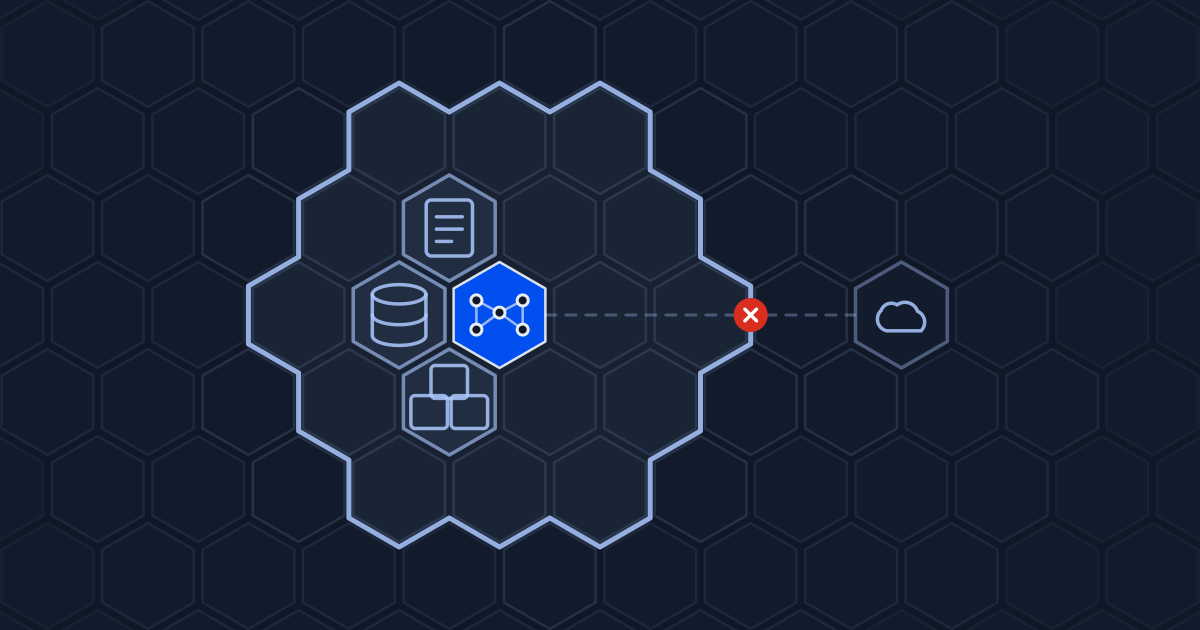
Running GenAI inside the firewall keeps sensitive data on your own infrastructure. A practical look at what enterprise teams need to consider before deploying.
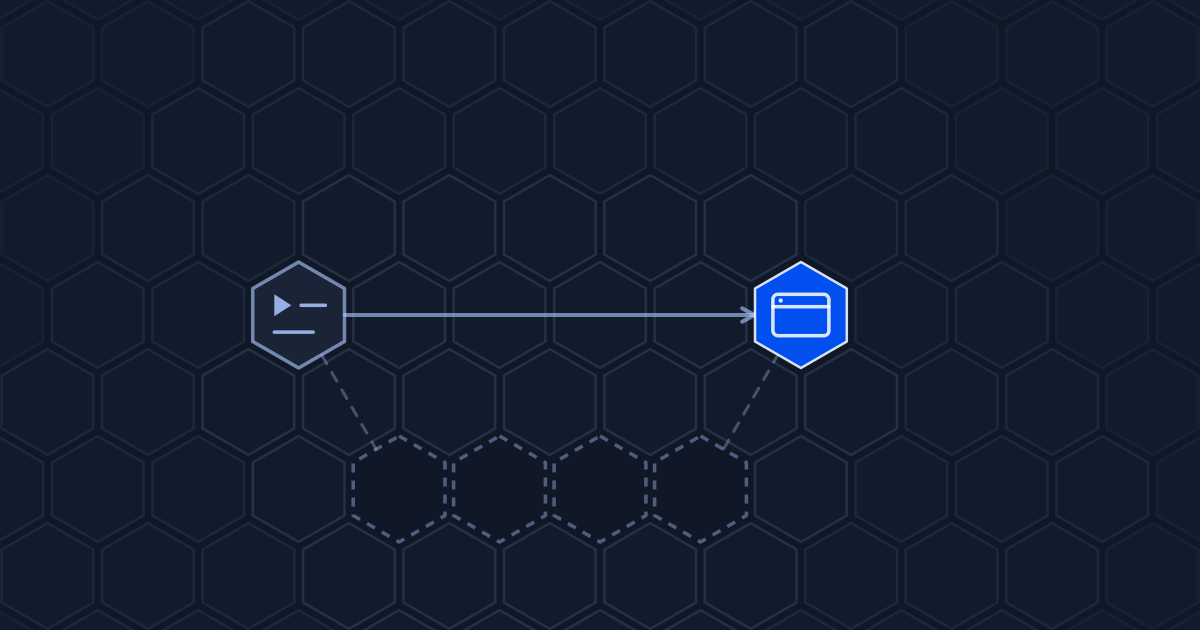
See how the Adamatics platform helps teams go from notebook to app - fast. Break silos, scale insights, and speed up collaboration securely.
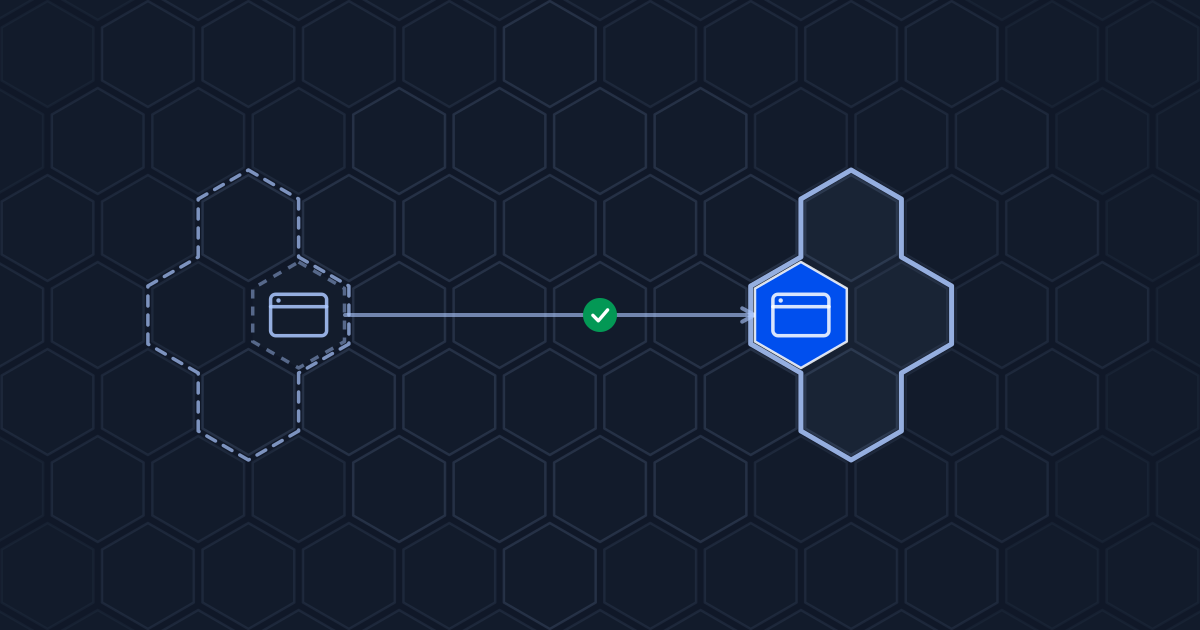
Turn ideas into impact fast. Discover how Adamatics helps teams build, share, and scale secure apps and insights with speed and governance.
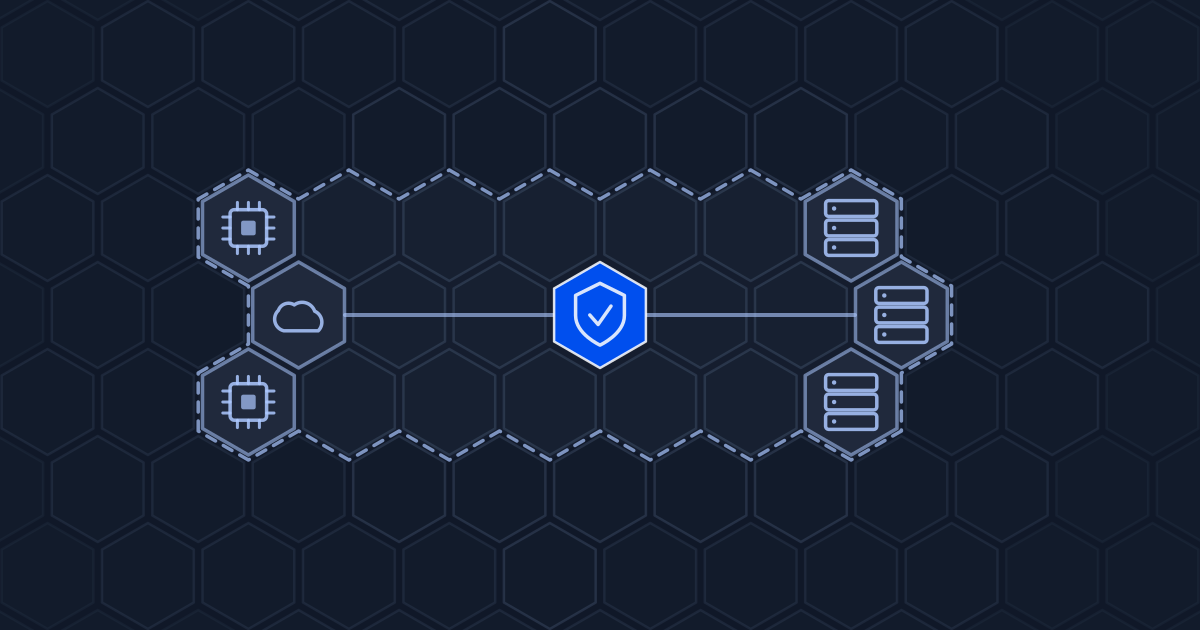
Discover how Adamatics Orchestration & Security helps teams manage compute, storage, and analytics workflows in one secure platform. Simplify governance, boost performance.
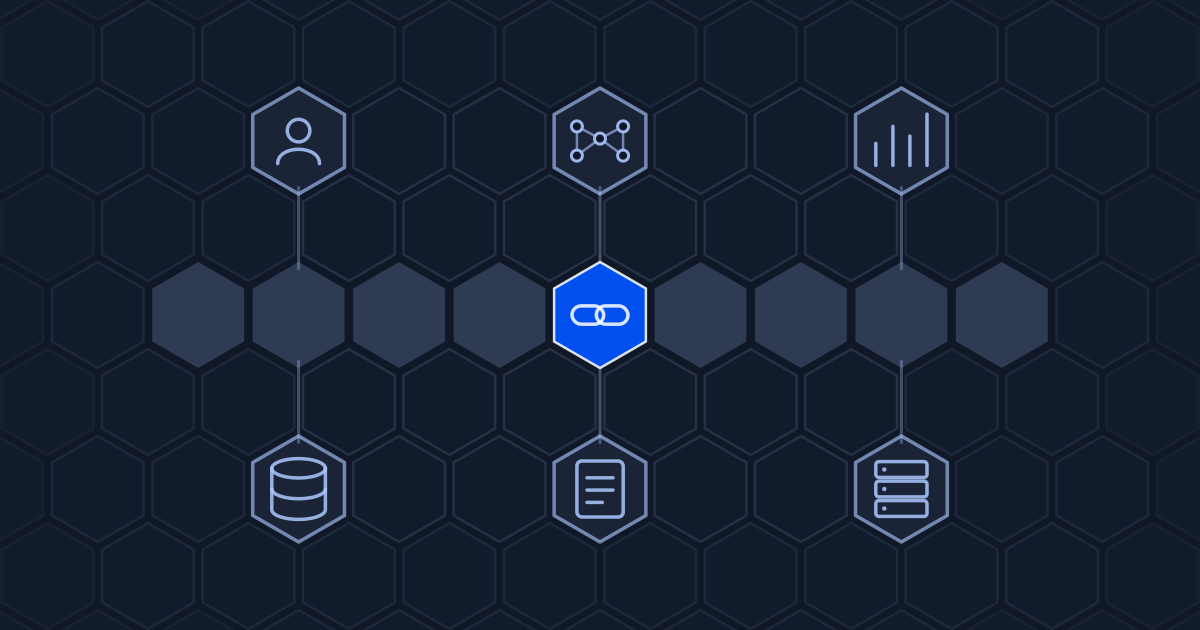
The Adamatics Integration Layer serves as a centralized API framework within the Adamatics platform, facilitating seamless, secure, and governed access to diverse enterprise data sources.
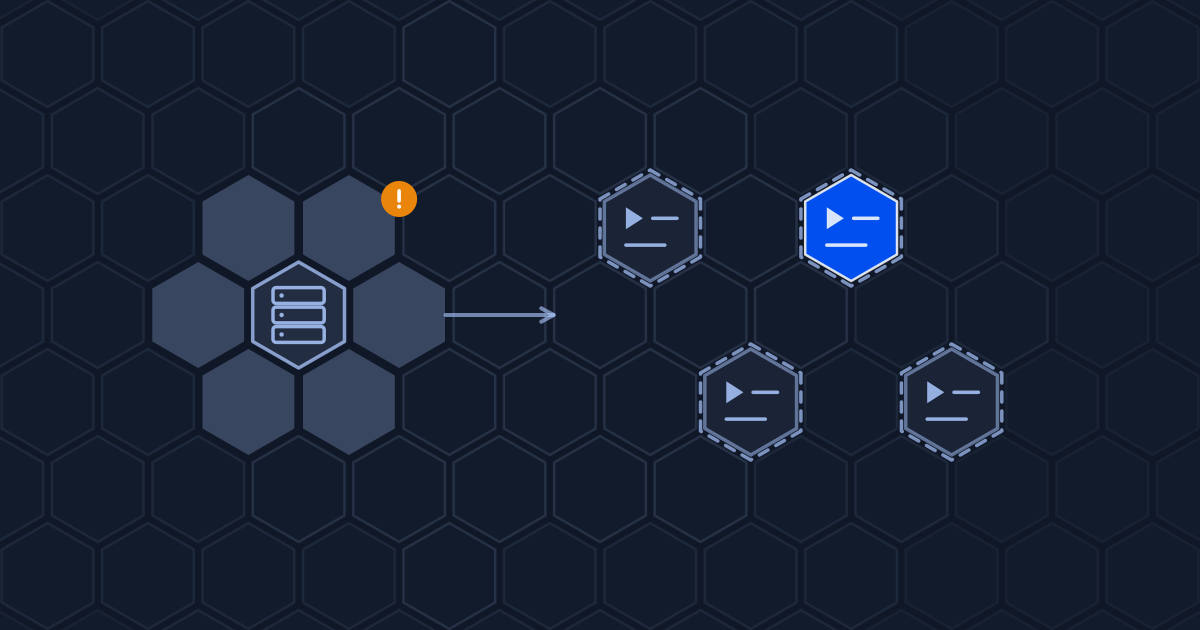
What happens when every data scientist runs their own Jupyter instance — and why the most common data science setup creates reproducibility and collaboration problems.
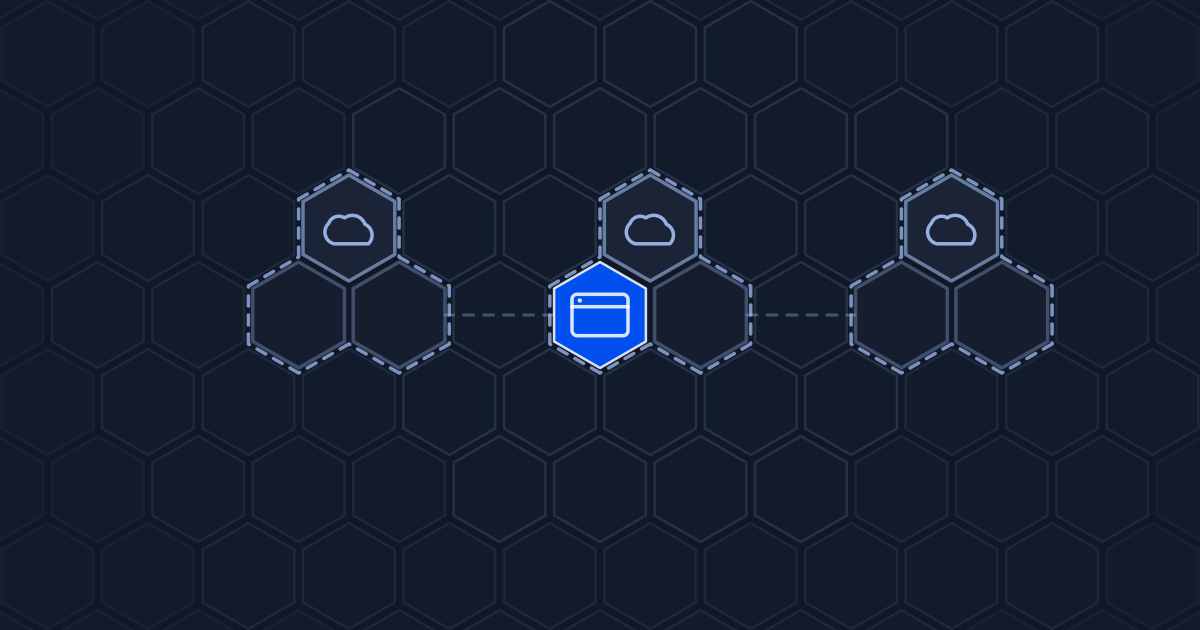
Explore key factors in choosing European cloud providers - from data sovereignty to compliance and operational strategy.
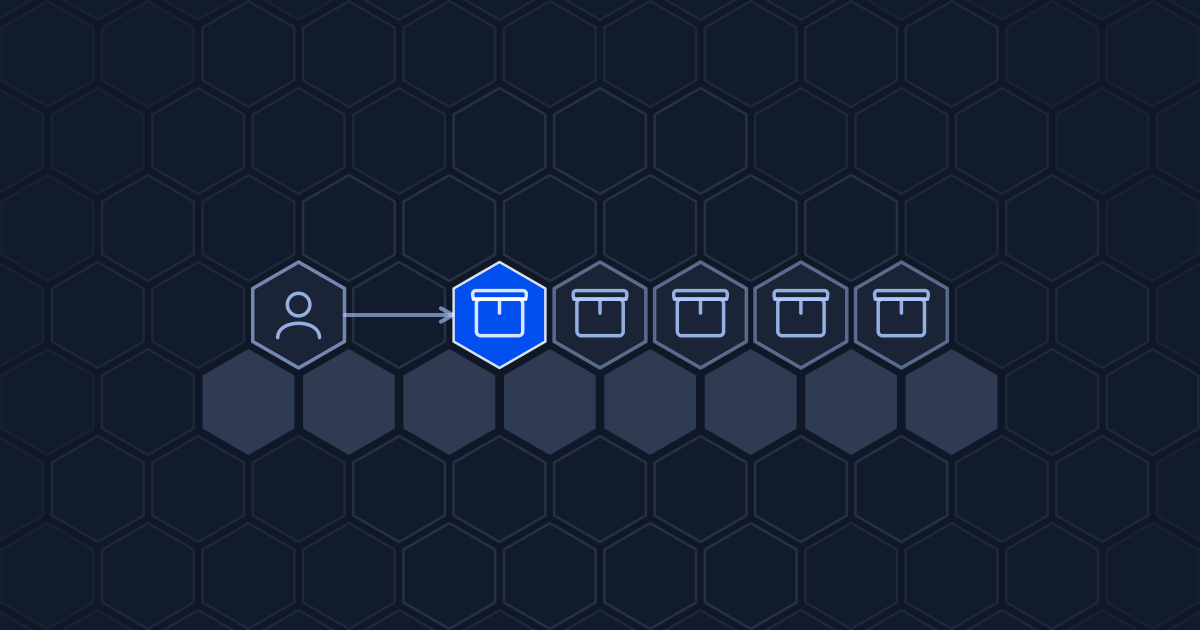
Self-Service Containerization, along with other self-service capabilities, offers a paradigm shift in empowering individuals to deliver digital artefacts autonomously.
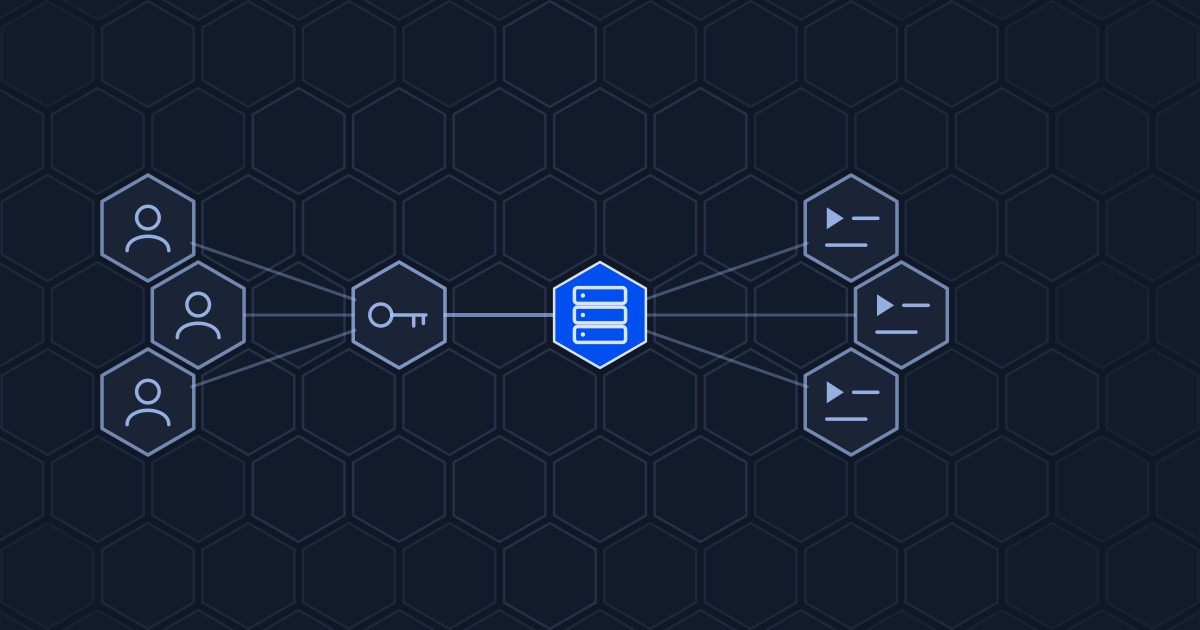
A monolithic Jupyter setup refers to a basic configuration where JupyterHub and Jupyter Notebooks are run on a single machine—typically a local server—with one or a few kernels. The kernel is the computational engine that executes your code, and in a monolithic setup, all operations (coding, data processing, visualization) are confined to that single machine.
We are based in Copenhagen. Book a call or write to info@adamatics.com.